A rigid box is the one that does not fold flat: thick grey board, wrapped in printed paper, built to be kept. Phones, watches, sweets, perfumes and gift hampers all arrive in one. The board and the wrap are much the same across styles. What changes is how the box opens, and that decides the cost, the feel and the shipping.
01 · How it is builtBoard, wrap, then finish
- The board: grey board (also called kappa board), usually 1.5 to 3 mm thick. It is cut and grooved, then the corners are taped to form a tray.
- The wrap: a printed and laminated sheet, usually 120 to 157 gsm art paper, glued over the board and turned in at the edges. Textured and speciality papers work too.
- The inside: a liner paper, plus an insert that holds the product: board, EVA foam, or a moulded tray.
- The finish: foil, emboss or spot UV goes on the wrap before it meets the board. See our finishing guide.
02 · The sixStyles, and what each is good at
Lid and base
Two trays: a base and a lid that slides over it. The lid can cover the full height or stop part-way to show a band of the base.
Good for: sweets, apparel, shoes, gift sets, anything opened often.
Magnetic flap
A one-piece box with a hinged front flap held shut by hidden magnets. It closes with a soft click and can be reused for years.
Good for: corporate gifts, electronics, cosmetics, welcome kits.
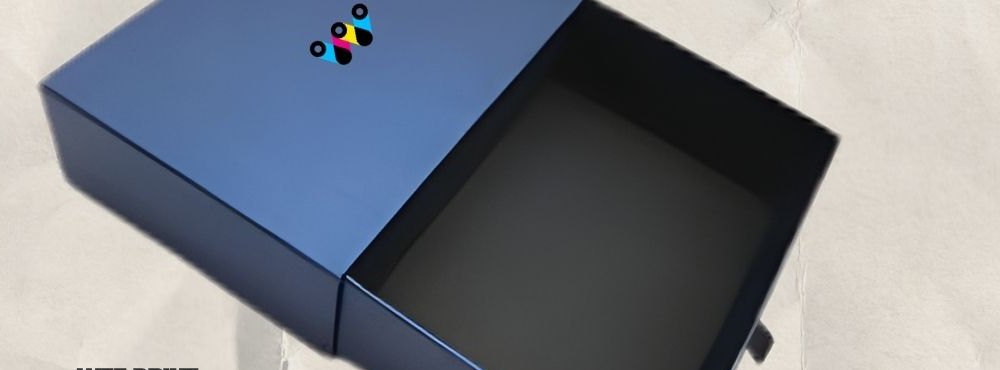
Drawer box
A tray that slides out of a sleeve, pulled by a ribbon tab or a thumb notch. Also called a slide box or matchbox style.
Good for: jewellery, watches, chocolates, small accessories.
Book style
A tray fixed inside a hard cover that opens like a book. The inside of the cover is a full panel for a message or a picture.
Good for: launch kits, influencer mailers, premium sets with a story to tell.
Shoulder box
A lid and base with an inner neck that stands proud of the base. The lid sits flush on it, with a clean line or a contrast band at the join.
Good for: perfume, watches, spirits, high-value products.
Collapsible rigid
Looks like a magnetic box when assembled, but the walls fold down flat for transport and pop up with tape or magnets at the corners.
Good for: e-commerce, exports, large volumes where freight and storage matter.
03 · Side by sideWhich does what
Cost here is a guide to the order, not a price. Size, board thickness, wrap paper, insert and finish move the number as much as the style does.
04 · ChoosingFive questions that pick the style
- How heavy is the product? Heavier items need thicker board and a snug insert. A lid and base or a shoulder box carries weight best.
- How will it travel? If boxes go by courier or overseas, a collapsible style cuts freight and storage sharply, because the boxes ship flat.
- Will it be kept? Magnetic and drawer boxes get reused, so your brand stays on a shelf long after the product is gone.
- How should it open? A drawer or a book cover slows the moment down. A lid and base is quick and familiar.
- How many, and how soon? Rigid boxes are partly hand-assembled. Simple styles move faster on large quantities.

05 · DetailsThe small things that matter
- Inserts: board partitions for sweets and bottles, EVA foam for electronics and glass, a paper-wrapped platform for a single hero product.
- Ribbon pulls and thumb notches: a drawer needs one or the other, or it will not open cleanly.
- Magnets: two are usual on a small flap; wide flaps need more so the corners sit flat.
- Outer sleeve: a printed sleeve over a plain rigid box lets one box serve several products or seasons.
- Sizes: give the product size and we work outwards. Leave 2 to 3 mm of clearance around the product, more with foam.
Not sure a rigid box is needed at all? Our post on mono carton vs rigid box covers that choice.
Need a rigid box?
Tell us the product, its size and the quantity. We'll suggest a style and send a sample before the run.