Ask two printers for a quote and one may say offset while the other says digital. Neither is better across the board. They are two different ways of putting ink on paper, and the right one depends mostly on how many copies you need, what you are printing on, and how exact the colour has to be.
01 · How they workPlates or no plates
Offset uses a metal plate for each colour. Ink goes from the plate to a rubber blanket and then onto the sheet, colour after colour, in one pass through the press. Making the plates and setting up the press, called make-ready, takes time and paper. After that, the press runs fast and every extra sheet costs very little.
Digital prints straight from the file, with toner or ink, like a very large and very precise office printer. There are no plates and almost no set-up, so the first copy costs about the same as the hundredth.
02 · Side by sideWhich does what
03 · ChoosingSix jobs, and which press wins
Short runs
No plates and no make-ready, so a small quantity costs far less to start.
Long runs
Set-up is paid once, then each extra sheet costs little.
Names, numbers, codes
Each sheet can change: serial numbers, names, QR codes, versions by city.
Pantone and spot colours
Mixed spot inks and tight colour control across a long run.
Packaging
Heavier board for cartons and rigid-box wraps runs best on a sheetfed press.
Samples before the run
Print one real copy on the real stock to sign off before the run.
04 · The crossoverWhere offset starts to win
Somewhere between a few hundred and a few thousand copies, the lines cross: digital's steady cost per copy overtakes offset's set-up cost. Where exactly depends on the sheet size, the paper, how many colours, and the finishing. That is why a good printer quotes both when your quantity sits near the line, and why reprints often move from digital to offset as a product grows.
- Launch small, then scale: print the first few hundred cartons or labels digitally to test the market, then move the repeat order to offset.
- Mix in one job: run the main print on offset and the personalised or short versions digitally, matched to the same proof.
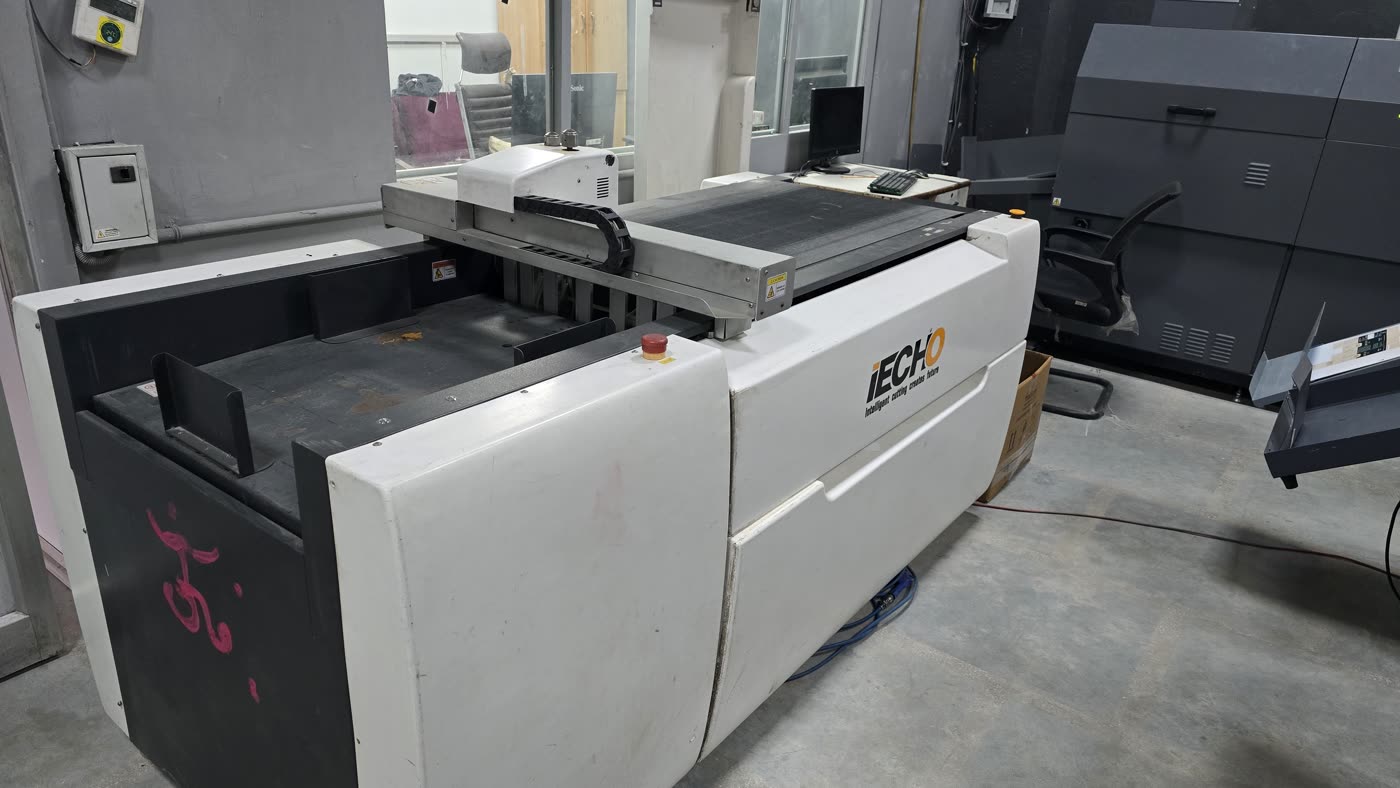
- No die for short runs: a digital cutting table cuts cartons, labels and stickers straight from the file, so a few hundred boxes don't need a cutting die made first.
- Finishing is the same: foil, emboss, spot UV, lamination and die-cutting work on sheets from either press. Our finishing guide explains each.
05 · On our floorBoth presses, one team
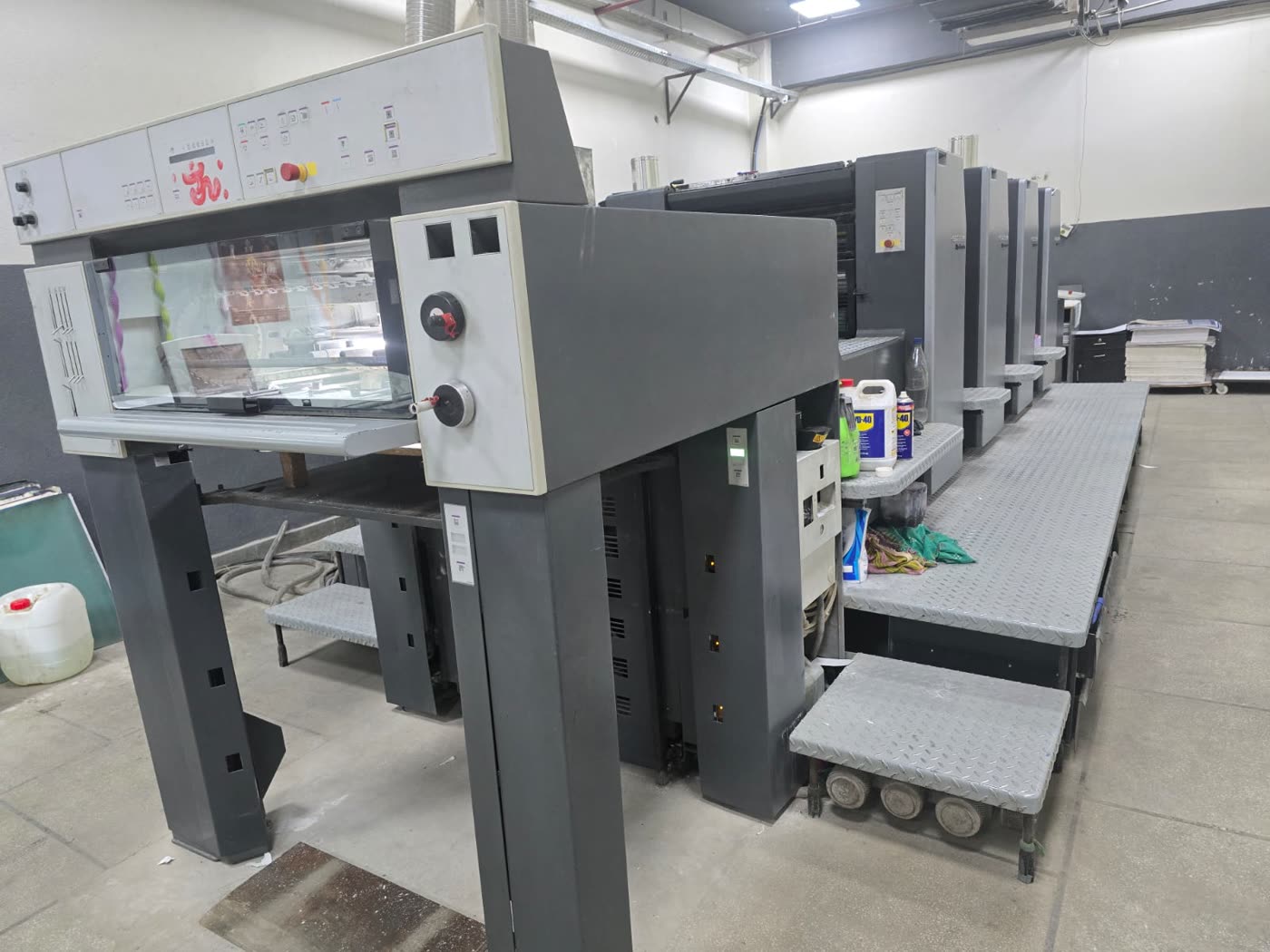
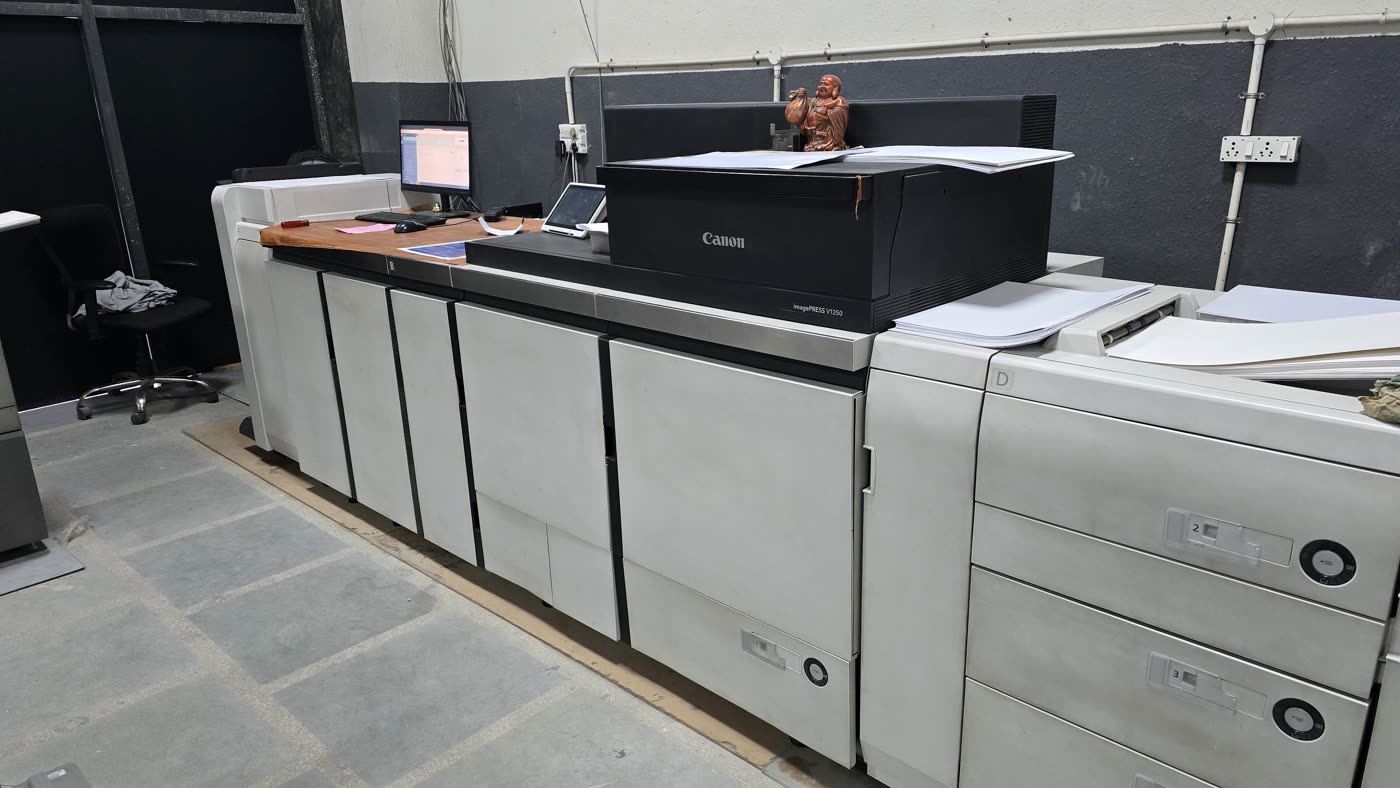
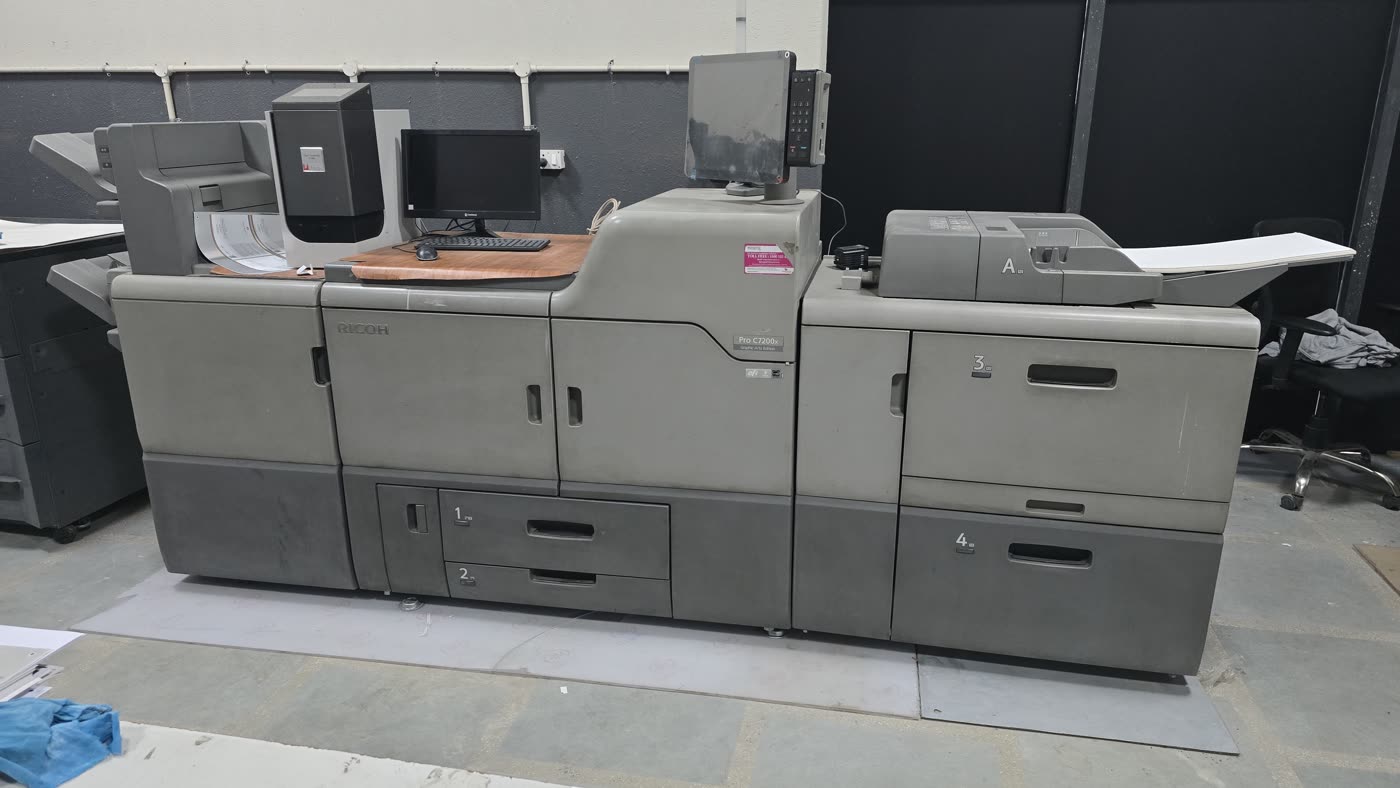
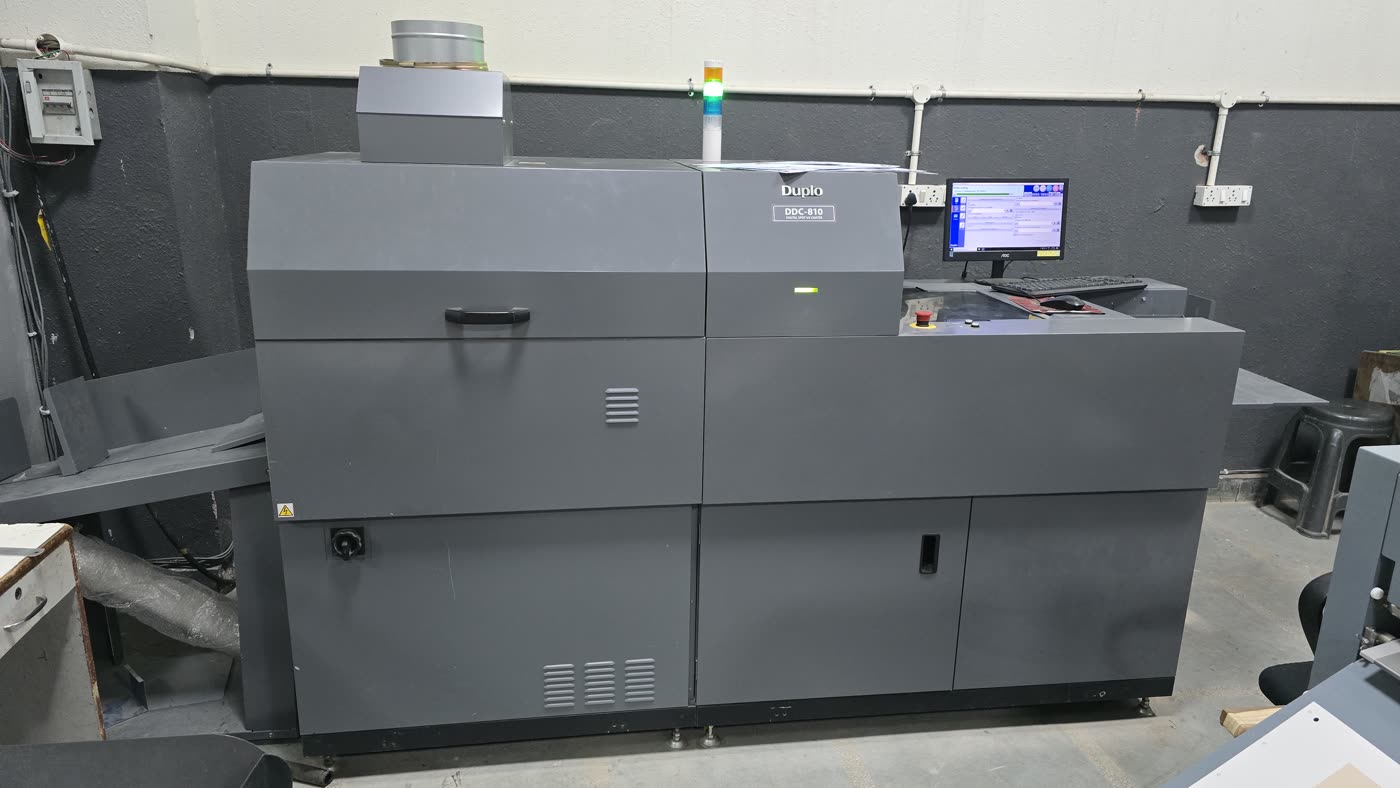
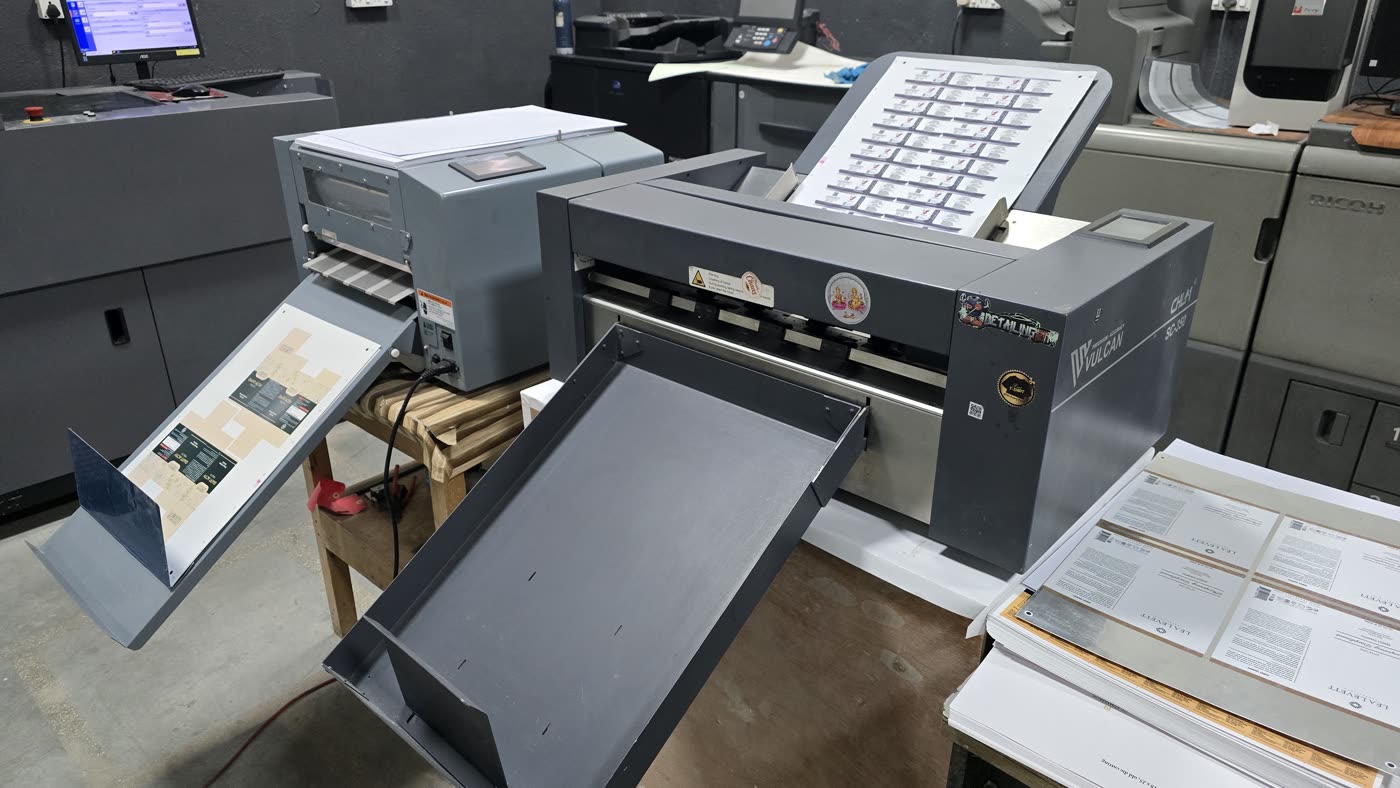
We run a 5-colour sheetfed offset press for packaging and board and a 4-colour offset press for commercial work and books. Beside them sits a full digital line: a Canon imagePRESS V1350 and a Ricoh Pro C7200x, whose fifth colour station adds white and other special inks; an iECHO digital cutting table that cuts boxes and labels without a die; a Duplo DDC-810 for spot UV and raised spot UV; and a card cutter and creaser for visiting cards and invitations. Because both lines sit on one floor in Sahibabad, we quote whichever suits your quantity and hold both to the same signed colour proof.
Sending files? Use our artwork checklist and the paper and board guide.
Not sure which press?
Send the quantity, size and paper. We'll tell you which press suits it and send a quote.